To provide high-quality Water pump products for global customers.


Understanding the Mechanics and Applications of Multistage Pumps
Feb 10,2026
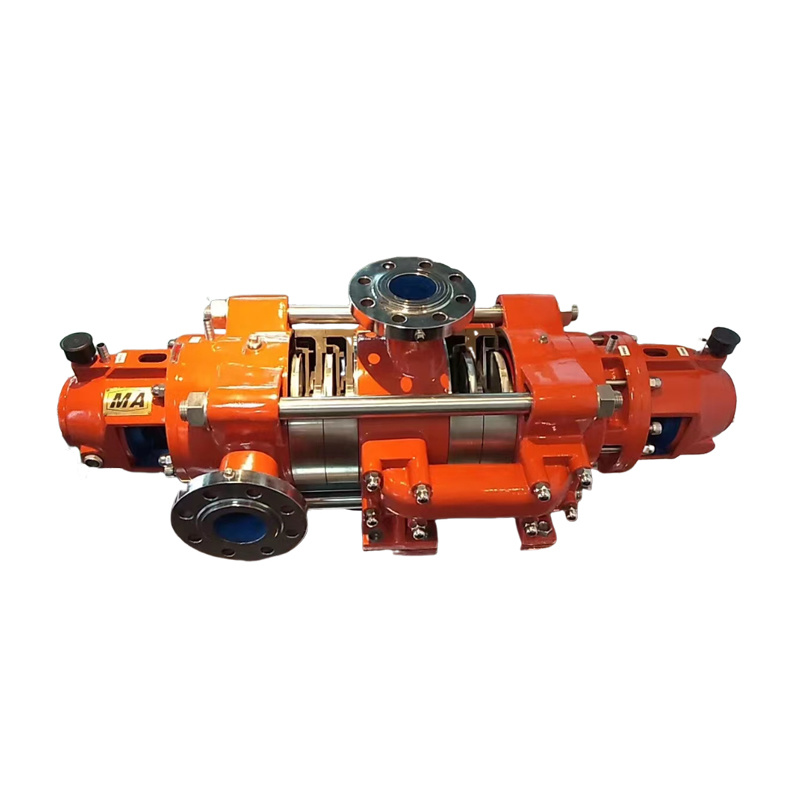
Multistage pumps are essential tools in various industrial applications, designed to move fluids efficiently by utilizing multiple impellers or stages. Each stage consists of an impeller and a diffuser, which work together to increase the pressure of the fluid being pumped. By employing several stages, these pumps can achieve high pressures and are commonly used in situations where a single-stage pump would be inadequate.
One of the primary advantages of multistage pumps is their ability to handle high-pressure applications. They are particularly suitable for transferring liquids over long distances or lifting fluids from deep sources. For instance, multistage pumps are often employed in water supply systems, boiler feed systems, and even in hydraulic applications where pressurized fluids are crucial.
The design of a multistage pump involves a series of impellers mounted on a single shaft, each contributing to the overall increase in pressure. The fluid enters the first impeller, where kinetic energy is imparted, and is then directed into the diffuser, converting this kinetic energy into pressure. The fluid then moves to the next impeller, and the process continues through all the stages. This staged approach allows for a gradual increase in pressure, making multistage pumps highly efficient.
In addition to their pressure capabilities, multistage pumps are known for their versatility. They can be designed for various fluids, including clean water, corrosive liquids, and even slurries. Depending on the application, materials used in construction can be tailored, ensuring durability and compatibility with the fluid being pumped.
When considering a multistage pump for a specific application, it's essential to evaluate several factors. Flow rate, total dynamic head (TDH), and the physical properties of the fluid, such as viscosity and density, should all be taken into account. These parameters will help determine the appropriate type and configuration of the pump needed for optimal performance.
Furthermore, regular maintenance is crucial to ensure the longevity and efficiency of multistage pumps. Common maintenance tasks include checking for wear on impellers, seals, and bearings, as these components can significantly influence performance. Proper alignment and regular inspections can prevent costly downtime and enhance the reliability of the system.
In conclusion, multistage pumps represent a vital component in the industrial sector, offering high-pressure performance, versatility, and efficiency. Understanding their mechanics and applications can lead to improved operational efficiency and better selection for specific needs. Whether in water treatment, industrial processes, or HVAC systems, the importance of multistage pumps cannot be overstated. Proper selection, installation, and maintenance are key to harnessing their full potential and ensuring sustainable operational success.
One of the primary advantages of multistage pumps is their ability to handle high-pressure applications. They are particularly suitable for transferring liquids over long distances or lifting fluids from deep sources. For instance, multistage pumps are often employed in water supply systems, boiler feed systems, and even in hydraulic applications where pressurized fluids are crucial.
The design of a multistage pump involves a series of impellers mounted on a single shaft, each contributing to the overall increase in pressure. The fluid enters the first impeller, where kinetic energy is imparted, and is then directed into the diffuser, converting this kinetic energy into pressure. The fluid then moves to the next impeller, and the process continues through all the stages. This staged approach allows for a gradual increase in pressure, making multistage pumps highly efficient.
In addition to their pressure capabilities, multistage pumps are known for their versatility. They can be designed for various fluids, including clean water, corrosive liquids, and even slurries. Depending on the application, materials used in construction can be tailored, ensuring durability and compatibility with the fluid being pumped.
When considering a multistage pump for a specific application, it's essential to evaluate several factors. Flow rate, total dynamic head (TDH), and the physical properties of the fluid, such as viscosity and density, should all be taken into account. These parameters will help determine the appropriate type and configuration of the pump needed for optimal performance.
Furthermore, regular maintenance is crucial to ensure the longevity and efficiency of multistage pumps. Common maintenance tasks include checking for wear on impellers, seals, and bearings, as these components can significantly influence performance. Proper alignment and regular inspections can prevent costly downtime and enhance the reliability of the system.
In conclusion, multistage pumps represent a vital component in the industrial sector, offering high-pressure performance, versatility, and efficiency. Understanding their mechanics and applications can lead to improved operational efficiency and better selection for specific needs. Whether in water treatment, industrial processes, or HVAC systems, the importance of multistage pumps cannot be overstated. Proper selection, installation, and maintenance are key to harnessing their full potential and ensuring sustainable operational success.
Contact Us
E-mail :
liu@cnpumpmade.com
WhatsApp:
+8615028256698
Address:
Nanyang Industrial Park, Shifo Town, Anguo City, Hebei Province, China


Leave Your Message