To provide high-quality Water pump products for global customers.


Double Suction Pumps: Unlocking Their Unique Advantages in Industrial Applications
Feb 17,2026
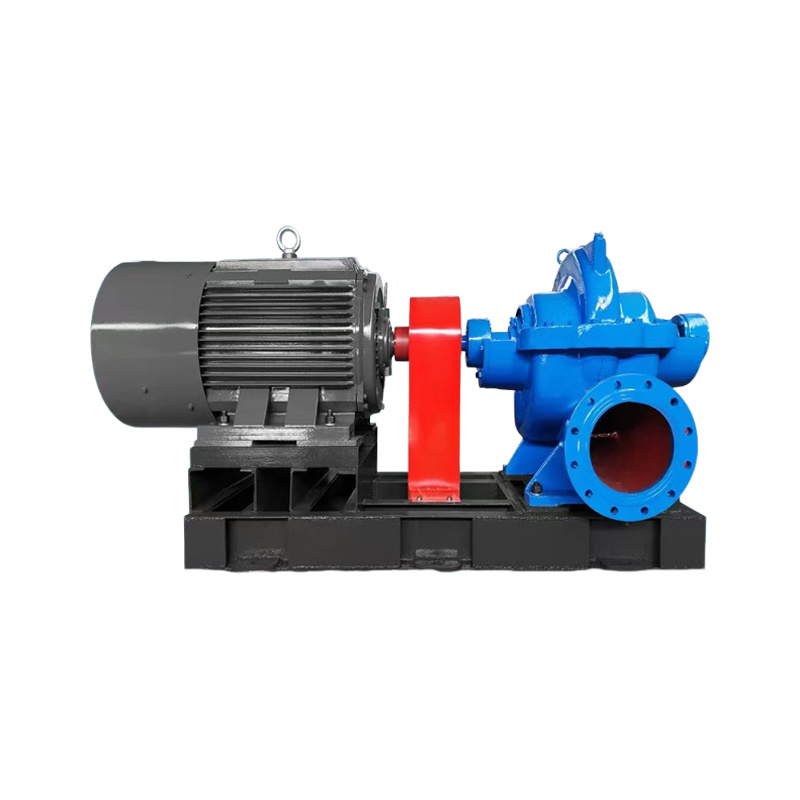
Double Suction Pumps: Unlocking Their Unique Advantages in Industrial Applications
Table of Contents
- 1. Introduction to Double Suction Pumps
- 2. What Are Double Suction Pumps?
- 3. Advantages of Double Suction Pumps
- 3.1 Increased Efficiency and Performance
- 3.2 Lower Vibration and Noise Levels
- 3.3 Easier Maintenance and Reliability
- 4. Applications of Double Suction Pumps in Industrial Settings
- 5. How Double Suction Pumps Work
- 6. Key Components of Double Suction Pumps
- 7. Selection Criteria for Double Suction Pumps
- 8. Maintenance Best Practices for Double Suction Pumps
- 9. Frequently Asked Questions
- 10. Conclusion
1. Introduction to Double Suction Pumps
Double suction pumps have emerged as essential components in various industrial applications, showcasing their remarkable capabilities and benefits. These pumps are engineered to handle substantial volumes of liquid with minimal vibration and noise, making them invaluable in settings that demand efficiency and reliability. In this article, we will explore the design, function, and advantages of double suction pumps, as well as their applications across different industries.
2. What Are Double Suction Pumps?
Double suction pumps are centrifugal pumps characterized by their unique dual inlet design, which allows fluid to enter the impeller from both sides. This configuration minimizes the radial load on the shaft, leading to reduced wear and tear, enhanced durability, and lower maintenance costs. Often used in high-flow applications, double suction pumps are favored for their ability to operate efficiently within a wide range of operating conditions.
3. Advantages of Double Suction Pumps
The unique design of double suction pumps offers several distinct advantages:
3.1 Increased Efficiency and Performance
Double suction pumps are capable of handling larger volumes of fluid compared to single suction pumps. Their design allows for higher flow rates and better performance at lower energy consumption levels, contributing to overall operational efficiency. This efficiency is particularly valuable in applications requiring consistent operation over extended periods.
3.2 Lower Vibration and Noise Levels
One of the standout features of double suction pumps is their ability to operate with significantly lower vibration and noise levels. By utilizing a balanced design with fluid entering from both sides, these pumps reduce the mechanical stress on the bearings and other components. The result is a quieter operation, which is crucial in environments where noise pollution can be a concern.
3.3 Easier Maintenance and Reliability
The construction of double suction pumps facilitates easier maintenance. With fewer components subjected to stress, the likelihood of mechanical failures decreases. Additionally, the accessibility of key components simplifies the inspection and maintenance process, ensuring that pumps remain operational with minimal downtime.
4. Applications of Double Suction Pumps in Industrial Settings
Double suction pumps find utility across a diverse range of industrial applications, owing to their robust performance and reliability.
4.1 Water Supply and Irrigation
In municipal water supply systems and irrigation projects, double suction pumps efficiently move large volumes of water. Their design ensures that water distribution remains consistent, making them ideal for agricultural and urban applications.
4.2 Heating and Cooling Systems
In HVAC systems, double suction pumps play a vital role in circulating water for heating and cooling. Their efficiency ensures optimal temperature control, enhancing the overall performance of heating and cooling units.
4.3 Petrochemical Industry
The petrochemical industry relies heavily on double suction pumps to transport various chemicals and fluids. Their ability to handle corrosive and high-temperature substances makes them indispensable in refineries and processing plants.
5. How Double Suction Pumps Work
The operation of double suction pumps is based on the principle of centrifugal force. When the pump is activated, the motor drives the impeller, creating a low-pressure area that draws fluid into the pump. With fluid entering from both sides of the impeller, the pump efficiently converts kinetic energy into hydraulic energy, propelling the fluid out through the discharge port.
6. Key Components of Double Suction Pumps
Understanding the key components of double suction pumps is essential for professionals working with these systems:
- Impeller: The impeller, often designed with curved blades, is crucial for generating flow and pressure.
- Volute: The volute casing directs the fluid flow and converts the kinetic energy into pressure.
- Suction and Discharge Flange: These flanges connect the pump to the piping system, facilitating fluid entry and exit.
- Bearing Assembly: Bearings support the rotating shaft, ensuring smooth operation and longevity.
- Mechanical Seal: This component prevents leakage by sealing the interface between the rotating and stationary parts.
7. Selection Criteria for Double Suction Pumps
Choosing the right double suction pump requires careful consideration of several factors:
- Flow Rate: Determine the required flow rate based on the application.
- Head Pressure: Assess the head pressure needed to overcome system resistance.
- Fluid Properties: Consider the temperature, viscosity, and chemical composition of the fluid being pumped.
- Energy Efficiency: Evaluate the pump's efficiency to minimize operational costs.
- Installation Space: Ensure that the pump's dimensions fit within the installation area.
8. Maintenance Best Practices for Double Suction Pumps
To ensure the longevity and efficiency of double suction pumps, adhere to these maintenance best practices:
- Regular Inspections: Conduct periodic inspections to identify wear and tear.
- Lubrication: Ensure that bearings and other moving parts receive adequate lubrication.
- Seal Checks: Inspect mechanical seals for leaks and replace them as necessary.
- Monitor Performance: Track flow rates and pressure levels to detect any operational anomalies.
- Cleanliness: Keep the pump and surrounding area clean to prevent contamination.
9. Frequently Asked Questions
1. What is the main advantage of double suction pumps over single suction pumps?
Double suction pumps offer increased efficiency, reduced vibration, and lower maintenance needs, making them ideal for high-flow applications.
2. In which industries are double suction pumps commonly used?
They are widely used in water supply systems, HVAC applications, and the petrochemical industry, among others.
3. How can I determine the appropriate size of a double suction pump for my needs?
To select the right size, consider the required flow rate, head pressure, and fluid properties, along with the installation space.
4. What maintenance tasks should be performed on double suction pumps?
Regular inspections, lubrication, seal checks, and cleanliness are essential maintenance tasks.
5. Can double suction pumps handle corrosive fluids?
Yes, double suction pumps can be designed to handle corrosive fluids, provided they are constructed from appropriate materials.
10. Conclusion
Double suction pumps represent a significant advancement in pump technology, offering unique advantages that enhance their performance in industrial applications. Their efficient design reduces vibration and noise, while their robust construction ensures reliability and ease of maintenance. As industries continue to evolve, double suction pumps will remain integral to effective fluid management, driving efficiency and productivity across various sectors. By understanding their benefits and operational mechanics, professionals can leverage these pumps to meet the demands of modern industrial environments effectively.
Contact Us
E-mail :
liu@cnpumpmade.com
WhatsApp:
+8615028256698
Address:
Nanyang Industrial Park, Shifo Town, Anguo City, Hebei Province, China


Leave Your Message