To provide high-quality Water pump products for global customers.


Understanding Multistage Pumps: Efficiency and Applications in Industrial Settings
May 13,2026
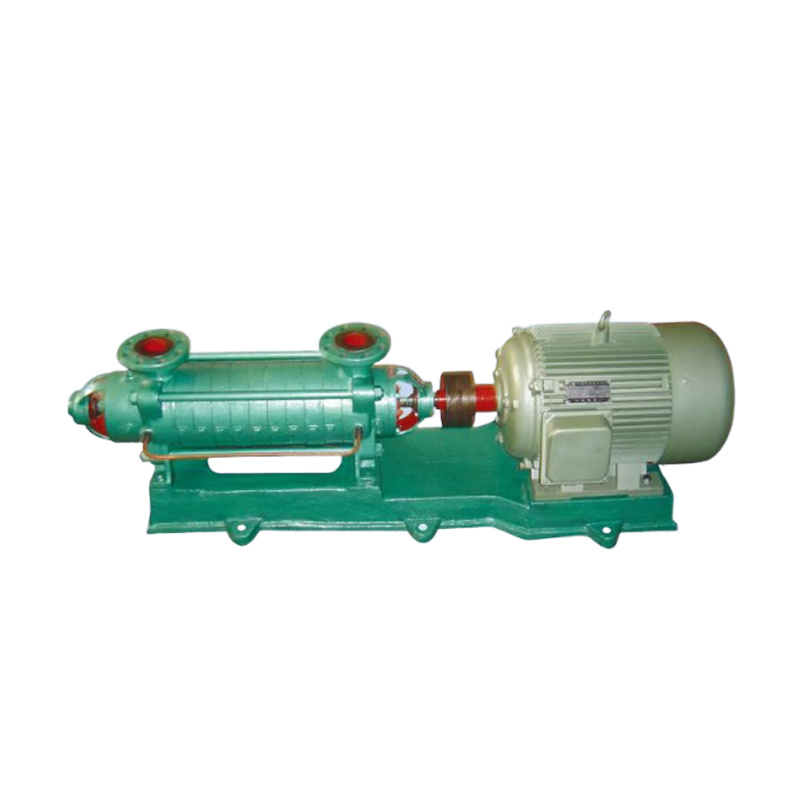
Multistage pumps are essential components in various industrial applications, designed to transport fluids efficiently over significant distances and against high pressures. Unlike single-stage pumps, which utilize one impeller to generate pressure, multistage pumps incorporate multiple impellers (or stages) in series. This design enables them to achieve a higher pressure output, making them ideal for applications where higher pressure is required, such as in water supply systems, chemical processing, and HVAC systems.
One of the key advantages of multistage pumps is their ability to handle a wide range of flow rates and pressures. By adjusting the number of stages, engineers can tailor the pump's performance to meet specific operational requirements. This flexibility makes multistage pumps suitable for various processes, including boiler feedwater, irrigation, and mineral processing. Moreover, the ability to maintain efficiency across different flow scenarios helps in reducing energy consumption, which is a critical factor in industrial operations.
Multistage pumps are typically used in applications that require a high lift, or the ability to move fluid vertically. For instance, in municipal water systems, these pumps can be employed to elevate water from low-lying sources to treatment facilities or distribution systems. Additionally, they are often found in high-rise building water supply systems, where consistent water pressure is vital for functionality.
Durability and reliability are other significant factors that contribute to the popularity of multistage pumps. Many modern designs incorporate materials that resist corrosion and wear, which is particularly important in chemical processing applications where aggressive substances are involved. Furthermore, multistage pumps are engineered to minimize maintenance requirements and downtime, promoting operational efficiency.
When selecting a multistage pump for a specific application, it is essential to consider factors such as the nature of the fluid being pumped, temperature, and the desired pressure and flow rate. Engineers often rely on performance curves and system head calculations to ensure that the selected pump meets the operational demands efficiently.
In summary, multistage pumps are a versatile and efficient choice for various industrial applications, offering the ability to manage high pressures and flow rates effectively. Their design allows for customization to meet specific needs, while their durability helps ensure long-term reliability in demanding environments. Understanding the principles and advantages of multistage pumps can assist professionals in making informed decisions that enhance operational efficiency and performance in their respective industries.
One of the key advantages of multistage pumps is their ability to handle a wide range of flow rates and pressures. By adjusting the number of stages, engineers can tailor the pump's performance to meet specific operational requirements. This flexibility makes multistage pumps suitable for various processes, including boiler feedwater, irrigation, and mineral processing. Moreover, the ability to maintain efficiency across different flow scenarios helps in reducing energy consumption, which is a critical factor in industrial operations.
Multistage pumps are typically used in applications that require a high lift, or the ability to move fluid vertically. For instance, in municipal water systems, these pumps can be employed to elevate water from low-lying sources to treatment facilities or distribution systems. Additionally, they are often found in high-rise building water supply systems, where consistent water pressure is vital for functionality.
Durability and reliability are other significant factors that contribute to the popularity of multistage pumps. Many modern designs incorporate materials that resist corrosion and wear, which is particularly important in chemical processing applications where aggressive substances are involved. Furthermore, multistage pumps are engineered to minimize maintenance requirements and downtime, promoting operational efficiency.
When selecting a multistage pump for a specific application, it is essential to consider factors such as the nature of the fluid being pumped, temperature, and the desired pressure and flow rate. Engineers often rely on performance curves and system head calculations to ensure that the selected pump meets the operational demands efficiently.
In summary, multistage pumps are a versatile and efficient choice for various industrial applications, offering the ability to manage high pressures and flow rates effectively. Their design allows for customization to meet specific needs, while their durability helps ensure long-term reliability in demanding environments. Understanding the principles and advantages of multistage pumps can assist professionals in making informed decisions that enhance operational efficiency and performance in their respective industries.
Contact Us
E-mail :
liu@cnpumpmade.com
WhatsApp:
+8615028256698
Address:
Nanyang Industrial Park, Shifo Town, Anguo City, Hebei Province, China


Leave Your Message