To provide high-quality Water pump products for global customers.


Understanding Gravel Pumps: The Essential Tool for Heavy-Duty Applications
Sep 13,2026
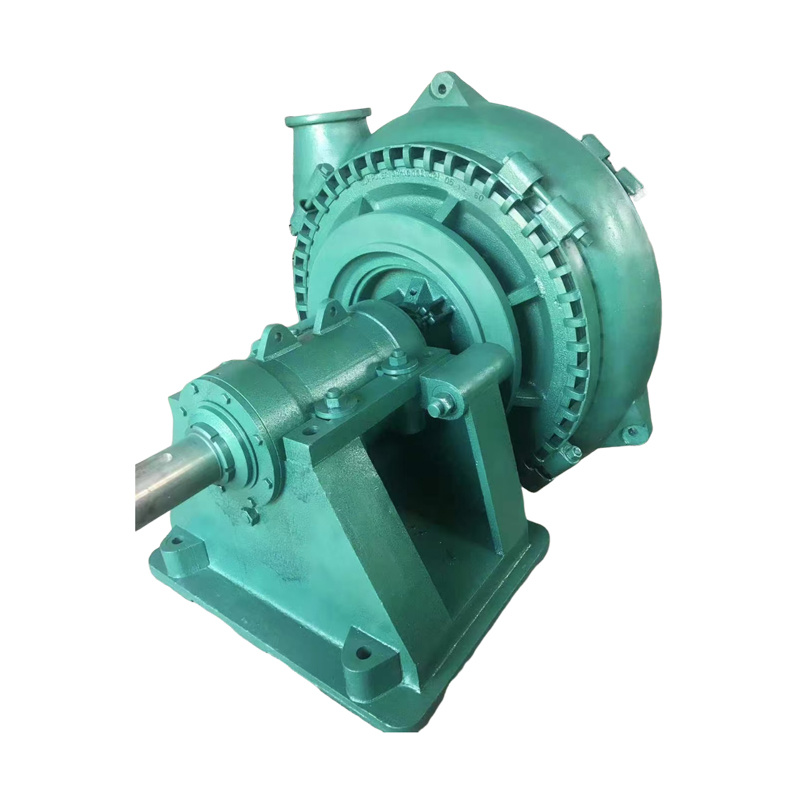
Gravel pumps play a crucial role in industries that require the transportation of abrasive and heavy materials, such as sand, gravel, and slurry. These specialized pumps are designed to handle challenging conditions that standard pumps may not withstand. Understanding the functioning and benefits of gravel pumps can help businesses make informed decisions regarding their equipment needs.
Gravel pumps are generally classified as centrifugal pumps, utilizing a rotating impeller to create a high-velocity flow of the material being pumped. This mechanism allows them to efficiently move thick mixtures of sand and gravel, making them ideal for construction sites, mining operations, and dredging activities. The design of gravel pumps incorporates robust materials and reinforced components to withstand the wear and tear from abrasive substances.
One of the key advantages of using a gravel pump is its ability to handle a wide variety of particle sizes. Unlike traditional pumps, which may become clogged when faced with larger debris, gravel pumps are engineered to pass materials with larger particles without compromising performance. This characteristic makes them particularly valuable in environments where the material composition varies significantly.
Another notable feature of gravel pumps is their adaptability to different environmental conditions. Many gravel pumps are designed to be submersible, allowing them to operate effectively in waterlogged areas or underwater applications. This flexibility enables industries to maintain continuous operations even in challenging situations, ensuring productivity is not hindered.
Gravel pumps also offer energy efficiency benefits. By using a centrifugal mechanism, they can often operate with lower energy consumption compared to other pump types when moving heavy materials. This efficiency can lead to significant cost savings over time, making gravel pumps an economically favorable choice for businesses operating in sectors such as mining, construction, and waste management.
Moreover, maintenance and durability are critical factors to consider when selecting a gravel pump. Regular maintenance is essential to prolong the life of the pump and ensure optimal performance. Features such as replaceable wear parts and easy access to internal components for cleaning and repairs can greatly enhance the longevity and reliability of these pumps.
In conclusion, gravel pumps are indispensable tools in various industrial applications where the transportation of abrasive materials is required. Their robust design, ability to handle large particles, adaptability to different environments, and energy efficiency make them an ideal choice for businesses in need of reliable pumping solutions. Investing in a high-quality gravel pump can lead to improved operational efficiency and reduced downtime, making it a valuable asset in any industrial setting.
Gravel pumps are generally classified as centrifugal pumps, utilizing a rotating impeller to create a high-velocity flow of the material being pumped. This mechanism allows them to efficiently move thick mixtures of sand and gravel, making them ideal for construction sites, mining operations, and dredging activities. The design of gravel pumps incorporates robust materials and reinforced components to withstand the wear and tear from abrasive substances.
One of the key advantages of using a gravel pump is its ability to handle a wide variety of particle sizes. Unlike traditional pumps, which may become clogged when faced with larger debris, gravel pumps are engineered to pass materials with larger particles without compromising performance. This characteristic makes them particularly valuable in environments where the material composition varies significantly.
Another notable feature of gravel pumps is their adaptability to different environmental conditions. Many gravel pumps are designed to be submersible, allowing them to operate effectively in waterlogged areas or underwater applications. This flexibility enables industries to maintain continuous operations even in challenging situations, ensuring productivity is not hindered.
Gravel pumps also offer energy efficiency benefits. By using a centrifugal mechanism, they can often operate with lower energy consumption compared to other pump types when moving heavy materials. This efficiency can lead to significant cost savings over time, making gravel pumps an economically favorable choice for businesses operating in sectors such as mining, construction, and waste management.
Moreover, maintenance and durability are critical factors to consider when selecting a gravel pump. Regular maintenance is essential to prolong the life of the pump and ensure optimal performance. Features such as replaceable wear parts and easy access to internal components for cleaning and repairs can greatly enhance the longevity and reliability of these pumps.
In conclusion, gravel pumps are indispensable tools in various industrial applications where the transportation of abrasive materials is required. Their robust design, ability to handle large particles, adaptability to different environments, and energy efficiency make them an ideal choice for businesses in need of reliable pumping solutions. Investing in a high-quality gravel pump can lead to improved operational efficiency and reduced downtime, making it a valuable asset in any industrial setting.
Contact Us
E-mail :
liu@cnpumpmade.com
WhatsApp:
+8615028256698
Address:
Nanyang Industrial Park, Shifo Town, Anguo City, Hebei Province, China


Leave Your Message